A New Chapter for a Legendary Round
After a one-year absence, Croatia Rally returned to the FIA World Rally Championship calendar in an entirely new format. The event base moved from Zagreb to the port city of Rijeka, with crews operating out of the historic Grobnik circuit and tackling more than 300 kilometres of special stages spread across four days. The route abandoned the inland farmland roads of previous editions in favour of fast, grippy stages along the Adriatic coast combined with technical tests winding through the mountains of Kvarner and Istria. The field also welcomed back Kajetan Kajetanowicz and co-driver Maciej Szczepaniak, the only Polish crew in the entry list.
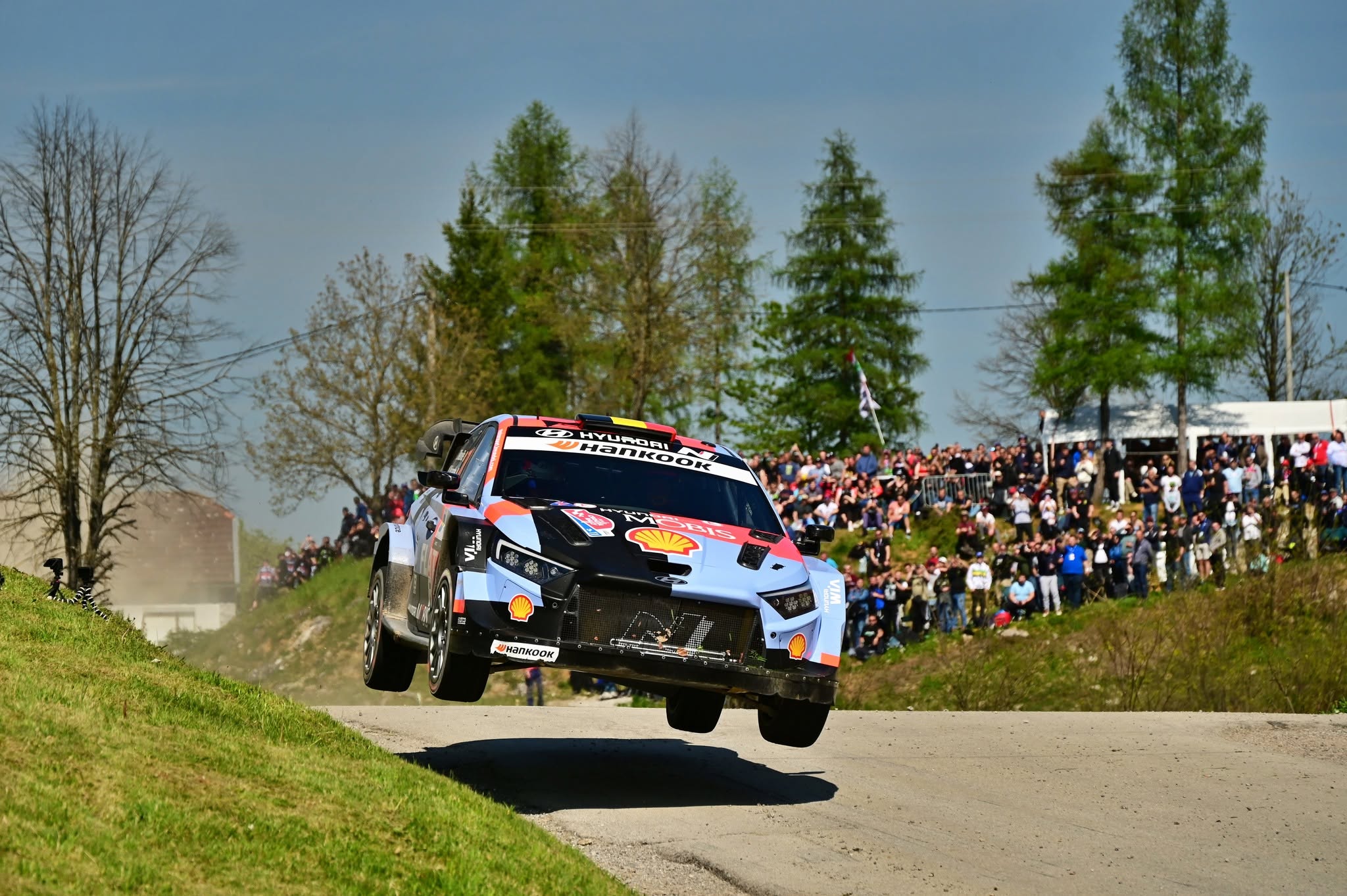
The pre-event favourite was championship leader Elfyn Evans, a past winner in Croatia back in 2023, up against his Toyota teammates Oliver Solberg, Takamoto Katsuta (fresh off a Safari Rally win) and Sami Pajari. On the Hyundai side, hopes rested on Thierry Neuville, chasing redemption on a surface where the Korean manufacturer had historically struggled.
Day 1 (Friday): Favourites Fall Like Flies
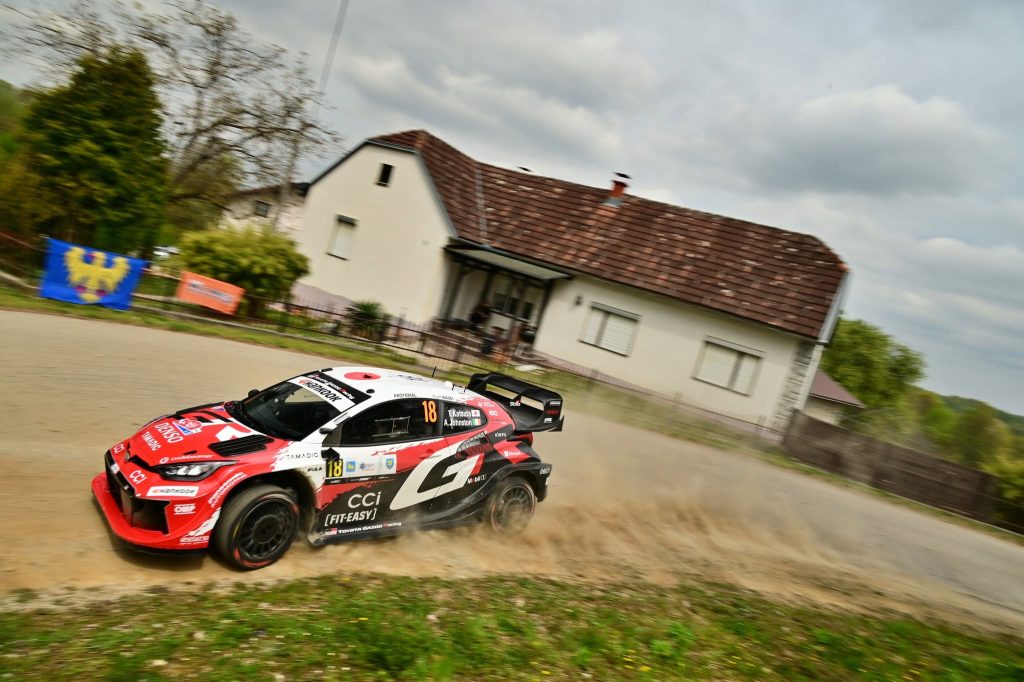
The very first loop of stages showed just how unpredictable this edition would be. The new, slippery tarmac — covered in gravel and debris cut onto the racing line — took a heavy toll on the front-runners: both reigning championship leaders went off during the opening loop, and Oliver Solberg was forced to retire after Friday troubles. Katsuta wasn’t spared either, running off the road on SS6.
Amid the chaos, Sami Pajari was the most consistent driver on track. The Finn took the lead and held it through the end of the day, with Thierry Neuville breathing down his neck throughout. The fight for the top spots was razor-close: at the finish of the day’s eighth and final stage, Neuville trailed Pajari by just 1.1 seconds, while Katsuta set the fastest time of the stage, edging out his Hyundai rival by a handful of seconds. Adrien Fourmaux rounded out the leading group, 4.5 seconds behind the Japanese driver. The day closed with Pajari on top, Neuville right behind him, and Katsuta well within striking distance — while both championship leaders, Evans and Solberg, were left picking up the pieces after their Friday mistakes.
Day 2 (Saturday): A Lottery on Stage Fourteen
The second leg took the field east of the Grobnik base across eight tests — Platak, Ravna Gora–Skrad, Generalski Stol–Zdihovo, and Pećurkovo Brdo–Mrežnički Novaki, each run twice. The stages mixed fast, wide sections with tight, twisty ones, and — just like the day before — a common thread was the huge amount of dirt dragged onto the racing line by cars cutting corners.
For most of the day, Sami Pajari was firmly in control, managing a leaf-covered, ever-changing surface and holding a comfortable cushion — 12.4 seconds at the midday service. Everything unravelled on the treacherous fourteenth stage, where the roads had degraded to something resembling gravel. A wave of tyre failures swept through the field there, and Pajari’s lead was among the casualties.
Thierry Neuville capitalised, ending the day with a lead of more than a minute (1:14.5) over second-placed Takamoto Katsuta — the Japanese driver, despite a puncture of his own, kept his composure and climbed back to second, though he made no secret of his frustration with conditions he likened to a lottery. Oliver Solberg, back in action after Friday’s retirement, showed blistering pace, winning four consecutive stages (nine through twelve) before a puncture on stage thirteen ended his run. Elfyn Evans closed out the day with a stage win of his own — a bittersweet moment after his earlier troubles.
In WRC2, Yohan Rossel remained at the front of the class, sitting fifth overall. Kajetan Kajetanowicz and Maciej Szczepaniak were eighth in the WRC2 Challenger category.
After two days of competition, the standings looked like this: Neuville held a commanding lead of over a minute ahead of Katsuta, while the battle for the remaining podium spots — with Pajari and Solberg very much in the mix — promised to stay tight right to the finish. Little did anyone know that Sunday’s finale would bring an even more dramatic twist.