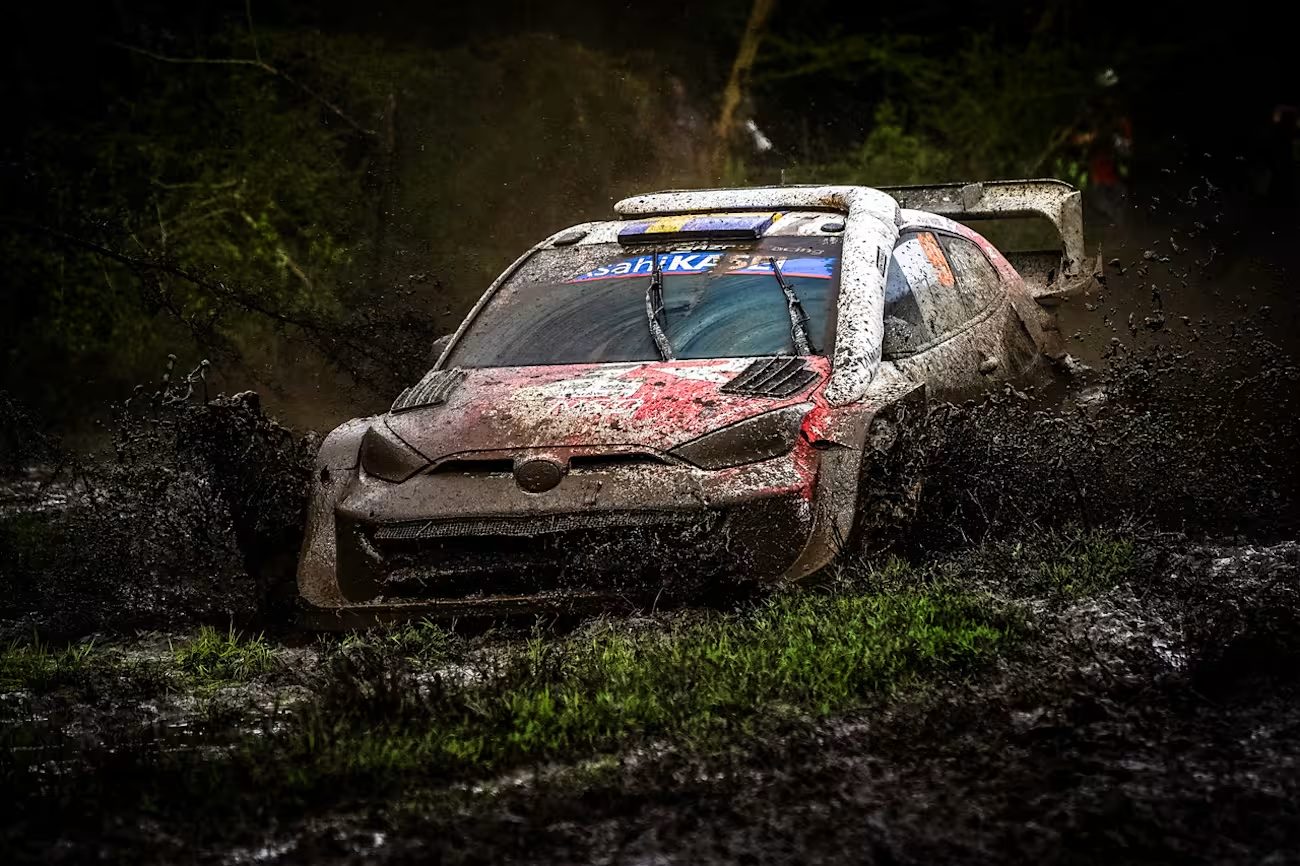
The opening day of Rally Safari Kenya 2026 immediately made it clear that this would not be a rally run in a conventional WRC rhythm. On the stages around Naivasha, conditions began changing faster than crews could establish any stable rhythm. Wet, heavy gravel alternated with deep ruts and sections where loose rocks instantly punished every small mistake.
In such conditions, the leading group quickly began to take shape, although without a single clear leader from the very start. At the front, Toyota crews immediately established themselves in close time proximity. Elfyn Evans and Takamoto Katsuta were effectively running in the same rhythm, with gaps between them remaining small throughout most of the day, measured in just a few seconds. This pairing quickly became the defining reference for the fight at the front.
Sami Pajari held third position, running in a more controlled rhythm without direct pressure from behind, but with a gradually increasing gap to the two leading Toyota crews. For him, the day was more about maintaining position than fighting for the lead.
Oliver Solberg remained close to the broader leading group at first, but his situation quickly stabilised into a separate category. The gap to the top three gradually increased with each stage, pushing him into a more isolated fourth position — with no real pressure from behind, but also no contact with the podium fight.
As the stages progressed, conditions began to play an increasingly important role. Rain in parts of the route softened the surface, while ruts deepened with every passing car. In these conditions, time differences were no longer defined purely by pace, but by how cleanly crews navigated the most damaged sections of the stages.
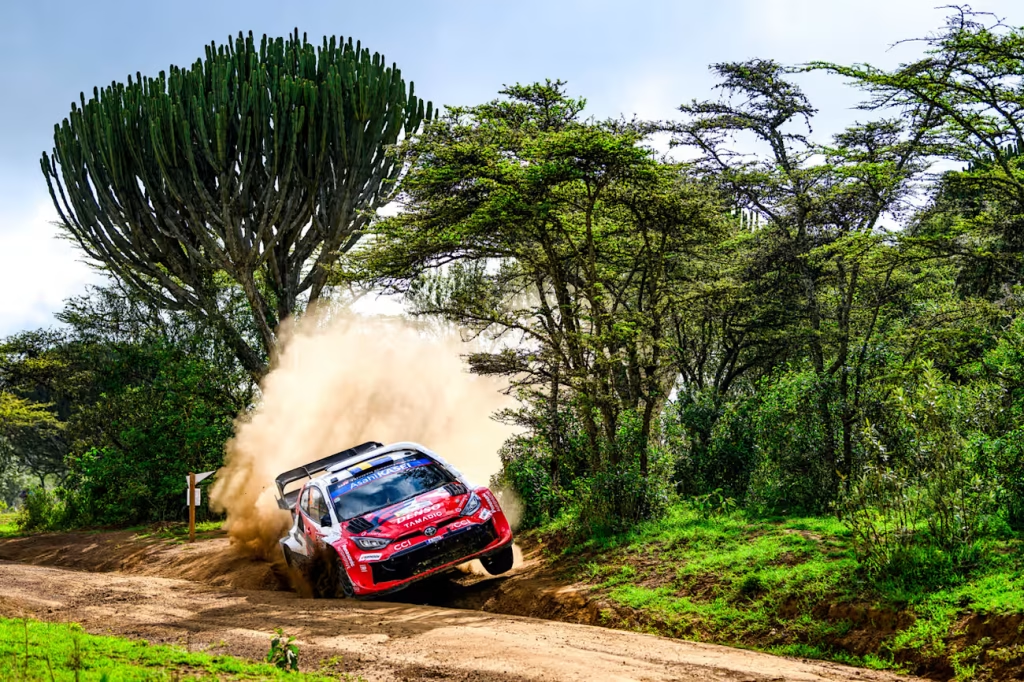
Toyota maintained full control of the leading positions, but the internal structure of the team became clearly defined: Evans leading, Katsuta a few seconds behind in direct contact, and Pajari slightly further back in third. The gaps were not large, but sufficient to maintain this hierarchy throughout the day.
Behind this trio, Solberg remained in fourth position, clearly separated from the podium battle. His day was defined more by maintaining pace in difficult conditions than by any realistic attempt to move forward in the classification.
Hyundai remained in the chasing group, with Esapekka Lappi and Adrien Fourmaux running in similar rhythms, but without a stage that allowed them to close in on Toyota. The gaps gradually became more established, with the leading group pulling away not through single mistakes, but through the accumulation of small losses across multiple stages.
Thierry Neuville dropped further down the classification after losing time during the day, effectively removing himself from the fight for top positions at this early stage of the rally. M-Sport Ford crews focused primarily on bringing cars to the finish in conditions that required caution and risk management from the outset.
In WRC2, the opening day also quickly began to separate the field. Safari conditions — deep ruts, mud and changing grip levels — meant that consistency and avoiding issues mattered more than outright speed. The leading group remained very close, but early gaps already started to appear due to small errors and clean, consistent driving.
In Junior WRC, the day was defined by a cautious approach and building results through clean stages. Young drivers focused on staying on the road and adapting to highly demanding conditions where even minor mistakes could result in significant time loss. After the first day, it was already clear that consistency would matter more than isolated fast stage splits in this category.