
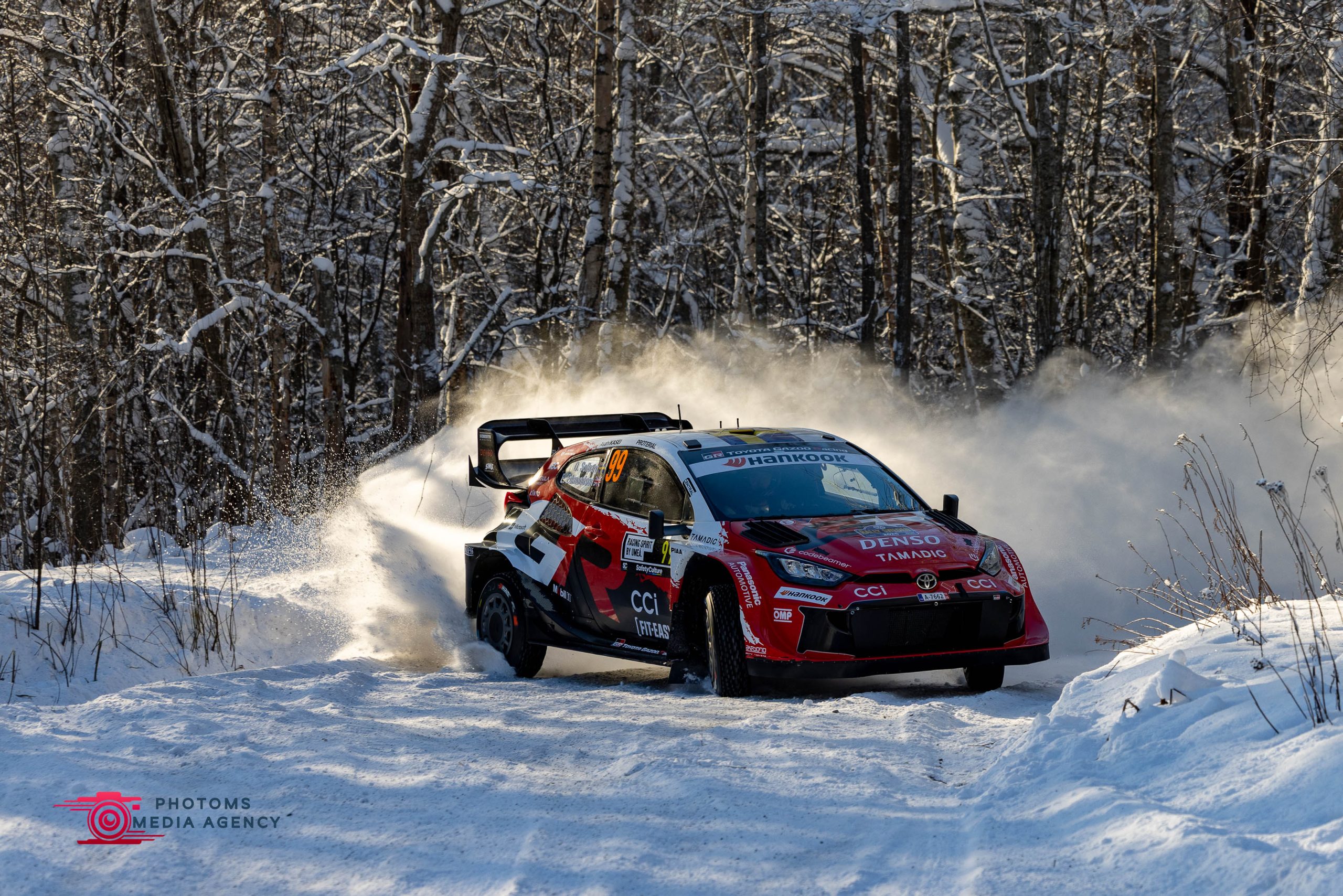
Friday – The second day of Rally Sweden turned the calm winter stages into a true ice-cold battle of nerves. On the snow and black ice around Umeå, the margin for error was practically non-existent, and every corner had the potential to change the outcome of the fight. In these conditions, WRC showed its most ruthless face – fast, deceptive, and completely unforgiving.
From the very morning, it was clear that this would not be a standard time trial, but a survival fight on the edge of grip. The stages changed character from minute to minute – at times offering a false sense of control, only to punish the slightest braking misjudgment moments later. In this icy trap, Toyota drivers found themselves best suited, setting a pace that the rest of the field could not consistently match.
At the front, Takamoto Katsuta delivered a composed and precise drive throughout the day, as if balancing on the edge of risk but never crossing it. His runs were clean, steady, and free of major mistakes – and in Sweden, consistency is the currency of success. However, pressure was building behind him with every passing stage.

Because right behind him was Elfyn Evans – quiet, patient, but extremely dangerous. The Welshman never let up for a single moment and was literally sitting on the leader’s rear bumper. The gaps between them were so small that every split time created more tension in the Toyota service area than the stage itself. This was no longer just a fight for seconds – it was a psychological battle for control of the rally.
In third place, Sami Pajari was fighting a race of his own. He drove maturely, but increasingly felt the leading duo beginning to pull away. Still, the Finn did not crack under pressure and consistently held onto his podium position, proving that winter conditions suit him naturally.
Behind the podium, the situation became increasingly tense. Hyundai drivers tried to chase, but the snow did not forgive any aggressive push. Esapekka Lappi fought to maintain fourth place, but a lack of full stability on the ice meant that every attack attempt was paid for in another section of the stage.
Just behind him, Adrien Fourmaux showed flashes of speed – quick sections, aggressive entries into corners – but Rally Sweden brutally punishes an all-in driving style. One slide was enough for all the gained time to disappear instantly.
In the background of this battle, local emotions were also strong. Oliver Solberg drove under immense home pressure, trying to use his knowledge of the conditions, but rivals gave him no room to breathe. Every stage was a fight just to stay in contact with the front runners.
Meanwhile, Thierry Neuville’s day was filled with frustration – small mistakes turning into significant time losses on the ice. The Belgian was unable to find rhythm, and the rally was slowly slipping out of his control.
As the sun began to set over the Scandinavian horizon, one thing became clear: this rally is only heating up. Toyota controls the front, but between Katsuta and Evans a nerve-wracking war is unfolding where a single slide can change everything. And the rest of the field? Waiting. Hoping for a mistake. And preparing to strike.
PhotoMS Media Agency / Rally Sweden 2026
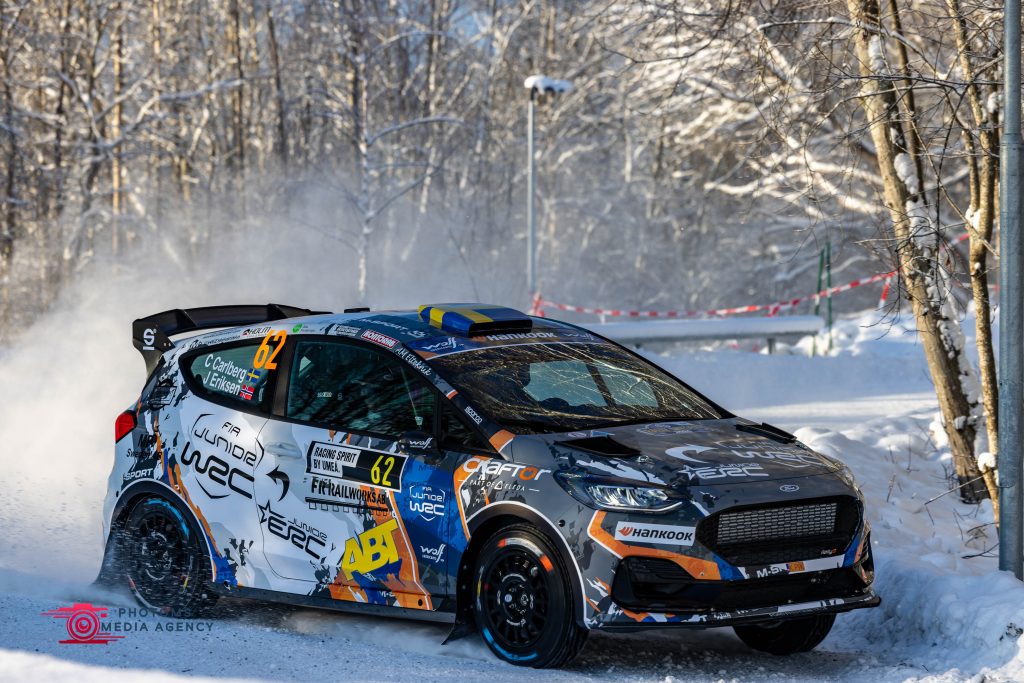
Friday – The second day of Junior WRC competition at Rally Sweden once again proved why this round is considered one of the most demanding of the entire season. Snow, black ice, and constantly changing grip levels meant that the young drivers were not only fighting for pace, but above all for control and survival on the stages.
From the very morning, the special stages around Umeå kept testing the crews’ judgement. Where there was grip one moment, black ice could appear the next, and any overly aggressive corner entry immediately resulted in lost time. In Junior WRC, therefore, raw speed was not the key factor – precision and adaptability were far more important.
At the front, the pace was cautious but highly consistent. Drivers focused on avoiding risks and building results through steady driving, fully aware that in Sweden a single mistake is extremely costly and often irreversible. The time gaps remained tight, yet each stage still brought small shifts in the classification.
The biggest challenge of the day turned out to be consistency. Maintaining the same rhythm across consecutive stages was extremely difficult, as conditions were constantly evolving. Sections of compact snow quickly turned into polished ice, forcing instant changes in driving style and commitment level.
Many competitors emphasized that trust in pace notes and patience were essential. Overreacting to small mistakes often led to bigger problems, while the snowbanks left almost no margin for corrections.
The second day of Junior WRC in Sweden was therefore above all a test of maturity. It was not about spectacular attacks, but about surviving the conditions and steadily building a result. In events like this, consistency rather than individual stage pace ultimately defines success.